


Polydextrose Syrup
1.Low-Calorie Sweetener: Polydextrose serves as a low-calorie substitute for sugar, making it a perfect ingredient for low-calorie and sugar-free products.
2.Dietary Fiber: It acts as a soluble fiber, supporting digestive health and helping to maintain a healthy gut.
3.Prebiotic Properties: Polydextrose functions as a prebiotic, encouraging the growth of beneficial gut bacteria and supporting overall intestinal health.
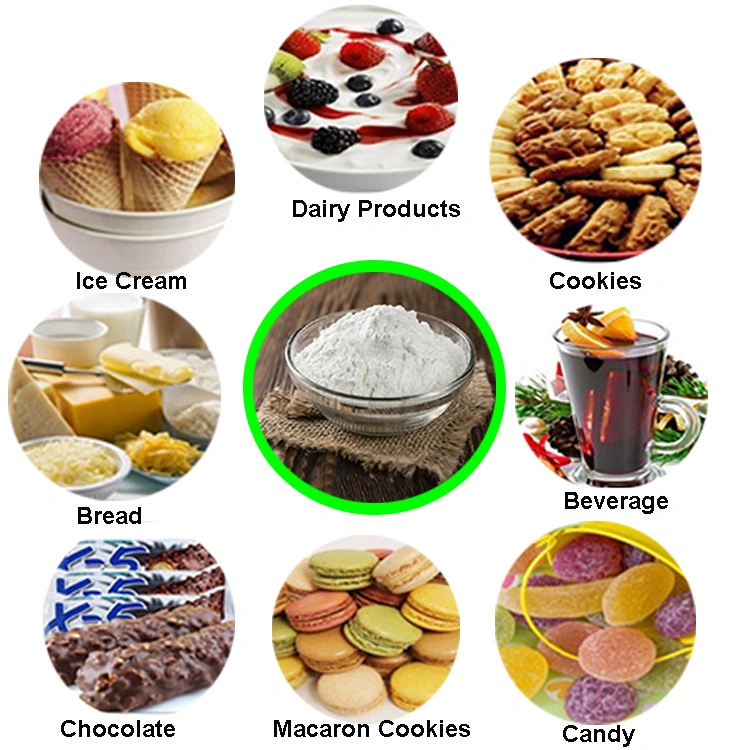
4.Versatile Application: It can be utilized in a broad range of food and beverage items, including baked goods, dairy products, and drinks, without affecting taste or texture.
5.Good Stability: Polydextrose is heat-resistant and has an extended shelf life, making it suitable for various food processing conditions and long-term storage.
Description
Polydextrose is a low molecular weight randomly bonded polysaccharide of glucose. All possible glycosidic linkages are present, with the 1,6 predominating. It has an average DP of 12 and an average molecular weight of 2000. Polydextrose was originally developed as a bulking agent but it has also gained popularity as a source of dietary fibre in many countries worldwide. This is due to its indigestibility in the small intestine and incomplete fermentation in the large intestine. Studies have shown that polydextrose increases faecal bulking and softening, decreases colonic pH and positively impacts the colonic microflora (Jie et al., 2000). It has a calorie content of 1 kcal/g (4 kJ/g) and is considered to contain 90% dietary fibre.
Tolerance
Nine clinical studies were carried out with polydextrose to evaluate gastrointestinal toleration. These studies demonstrated that polydextrose is well tolerated because it has a high molecular weight, low osmotic potential and slow fermentation rate. It has been demonstrated that its mean laxative threshold is 90 g/day, and a single dose of 50 g is tolerated (Flood et al., 2004). Studies have demonstrated enhanced bifidobacteria and lactobacillus counts with the consumption of polydextrose at doses as low as 4 or 5 g/day (Jie et al., 2000; Tiihonen et al., 2008). Studies have shown that polydextrose is fermented along the entire length of the colon, resulting in beneficial effects for the entire colon. Colonic fermentation of polydextrose increases the production of short-chain fatty acids (SCFAs), namely acetic acid, propionic acid and butyric acid. Wang and Gibson (1993) reported high generation of propionic and butyric acid compared with other carbohydrates. The molar ratio of acetate, propionate and butyrate was 61:25:14. A high rate of butyrate is desirable as it is thought to be particularly beneficial to colonocyte health.
Polydextrose, originally developed by Pfizer and now marketed by Danisco, has been refined to meet a wide range of application needs under the brand of Litesse®. Litesse® is an improved form of polydextrose. The Litesse® family contains three variants, varying from bland tasting and slightly yellow in colour to being slightly sweet and colourless in solution. Litesse® is available in powder, granulated and in a 70% liquid form. Litesse® polydextrose has many physical and chemical attributes that are favourable for use in beverages. Tate & Lyle also manufactures polydextrose.
Solubility
Polydextrose is very soluble, allowing clear solutions of greater than 80% w/w to be created at 25 °C in water without haze. Polydextrose has good dispersibility properties in all beverage formats. As with many ingredients good mechanical mixing is required to prepare concentrated solutions. Granulated polydextrose offers high dispersibility with minimum dusting.
Stability
Studies indicate that polydextrose is stable throughout typical beverage process and storage conditions at pH 3 and 7 (Beer et al., 1991). Polydextrose is a complex branched molecule and contains a wide range of glycosidic bonds which consequently are resistant to hydrolysis. Studies of model beverage systems containing polydextrose have shown resistance to hydrolysis over a broad range of pH and temperatures (Beer et al., 1991).
Viscosity
Litesse® is viscous at high levels (70% solution), and it has a higher viscosity than sucrose solutions or high-fructose corn syrup (HFCS) at similar concentrations. However, at practical use levels it has a low viscosity and can help retain mouthfeel in sugar-free or low sugar beverages.
Organoleptic properties
Polydextrose is essentially non-sweet but can be used to provide the bulk and mouthfeel often lost with the removal of sugars. Furthermore, polydextrose can improve the flavour of beverages containing high-potency sweeteners by reducing the bitter, acidic notes and improving the sugar flavour. At addition levels of below 3 g/100 ml it is difficult to detect so it can be used in most beverage applications. Differing grades are suitable for different beverage applications. Litesse® Two is suitable for drinks that have a high colour, such as juices, cordials and smoothies, as it imparts a slight yellow colour in solution. Litesse® Ultra is especially suitable for clear, low-flavoured products such as flavoured and near-water drinks owing to its minimal flavour and textural impact. Litesse® can be used in a variety of beverages including carbonated and non-carbonated, concentrated and ready-to-drink, hot and cold beverages. Examples include, fruit and/or vegetable juice drinks, smoothies, meal replacements, milk, dairy and soy-based drinks, sport and energy drinks, tea and coffee, creamers and water.


